Last month, I discussed what I think a book focusing on museum-organized outreach exhibitions might look like. This month, we’ll turn our attention to the chapters focusing on Community Art Centers. As you’ll see, my hypothetical plans for this half of the dissertation are no less ambitious.
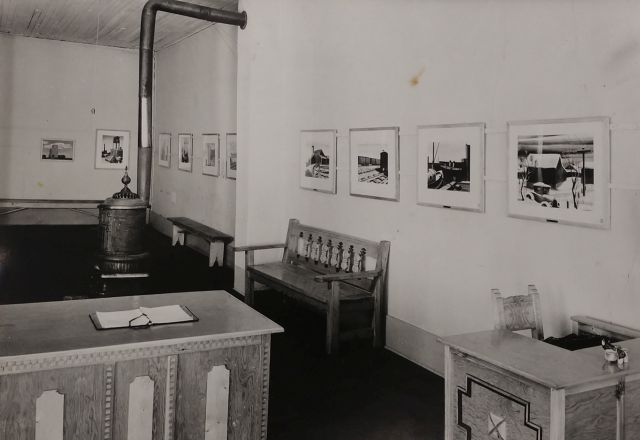
A Digital Humanities Project
Since I can’t seem to limit myself to one project, I actually envision two initiatives for my CAC work. In the first, I map out the CAC as a national art-sharing initiative through the digital humanities.
I envision this project happening in several phases. In the first stage, I’d plot out all identified sites for the initiative. Then I’d animate them by year to demonstrate the program’s operations over time. Next, I’d take the exhibition checklists I’ve compiled over the years and illustrate their contents online when I can positively identify the work. Finally, using the exhibition schedules I have found in various archives, I’d map out the transit routes of these exhibitions to my knowledge. By mapping these routes, I’d demonstrate the circulation of art across the duration of the CAC initiative.
Through this digital project, I’d consider the influence CACs on the development of an American art canon and enrich current understandings of New Deal art. I’d move beyond post office murals and other monumental artworks (significant as they are) to consider the hundreds of thousands of paintings, prints, and other works that circulated through community art centers.
To be clear, this is not a one-and-done kind of project. An initiative like this would take years to develop, as well as a team of researchers. But it would be deeply satisfying, and I’ve already started working on it through StoryMaps.
Another Book
In conjunction with this digital humanities initiative, I’d plan a book project on the history of CACs. Both the digital project and the book would address CACs from different angles The digital initiative would offer a comprehensive, national overview of CACs and their impact. The book would zero back in on specific art centers as case studies.
One framework I’ve been considering is race. Whereas the digital humanities project would consider the CACP’s national impact, the book would focus on specific art centers. I’d look at both segregated as well as integrated communities, and ask how the initiative engaged different Black, Latino, and white communities. One chapter would look at art centers in New Mexico and their fraught interactions with Hispano communities. Another chapter would consider segregated art centers in the South. I’d look into the exchanges that took place between Black-focused art centers in the North and South, as teachers and artists from Harlem and other northern neighborhoods were sent into southern communities. I’d then discuss one of the only intentionally integrated federal community art centers ever in operation, the People’s Art Center in St. Louis.
Differences from the Dissertation
In many ways, this hypothetical post-dissertation project is the most fleshed out. This is because it represents what I’ve been wanting to do all along: trace the history of federal community art centers. And thanks to connections I’ve fostered through the Living New Deal and other scholars, it’s got the most resources in terms of connections.
But it also shows how William & Mary has influenced my scholarship. Although I knew race always influenced CACs, I didn’t address it explicitly in my Roswell-era work. That’s a focus that’s developed through my coursework, comps, and most importantly, ongoing conversations with my classmates and colleagues. Through those discussions, I’ve developed a critical focus and lens that wasn’t fully developed when I started researching them
Again, like my other book idea, this one remains hypothetical. But I think it’s got potential if I find myself in a position where I can seriously work on it.