The Community Art Center Project
Overview
The Community Art Center Project developed out of the New Deal, a group of federal initiatives, programs, and reforms intended to ease financial hardships stemming from the Great Depression. Established in 1935 and supervised by the Federal Art Project (FAP), community art centers endeavored to provide rural and other underserved communities with the type of art access readily available in metropolitan areas, offering free exhibitions, art classes, and special programs. Unlike museums or commercial galleries, art centers were not collections-based institutions but acted as touring venues and activity spaces. Dozens of art centers opened in more than 20 states during the program's duration, with the majority concentrated in the American South and Southwest. While most of these art centers closed during World War II, the Roswell Museum and several others survived by evolving into new institutions. The only true New Deal-era art center still in operation is the Southside Community Art Center, located in Chicago.
You can access a list of known art centers by clicking here.
To open an art center, a civic group such as a historical society or local government submitted an application demonstrating sufficient communal interest and financial funding. Approved applications received staffing and equipment from the FAP. While some centers such as the Roswell Museum operated in new buildings specially designed as gallery spaces, most occupied empty shops and other vacant structures already available within the community.
Founding of the Roswell Museum
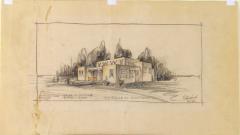
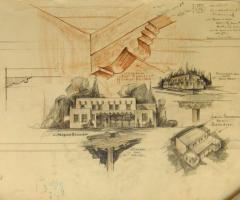
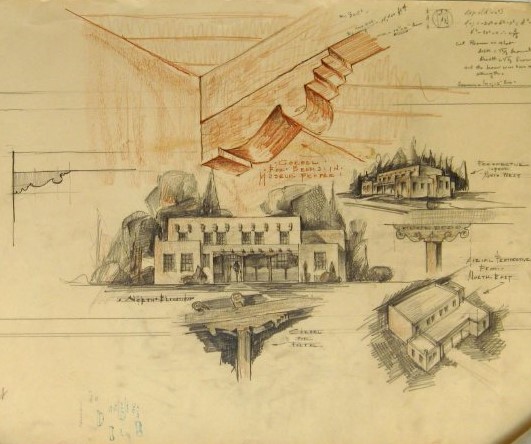
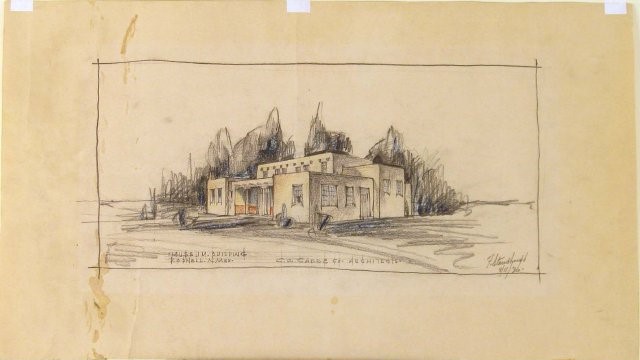
The Roswell Museum developed through a collaboration between the Federal Art Project and the Chaves County Archaeological and Historical (A&H) Society, now known as the Historical Society for Southeast New Mexico. The A&H Society initially developed the idea of creating a museum because it needed a permanent home for its artifact collection, at that time displayed in the public library. In November 1935, the Society met with Roswell’s Mayor, the City Manager, and the State WPA administrator to discuss constructing a museum building. Frank M. Standhardt (1913-1978) served as architect, and the WPA provided funds, which the A&H Society augmented through additional fundraising. Standhardt used a historicized, Spanish Colonial Revival aesthetic for the building, reflecting the A&H Society's focus on New Mexico history while echoing regional movements such as the Pueblo Revival of Santa Fe.
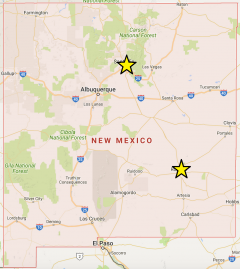
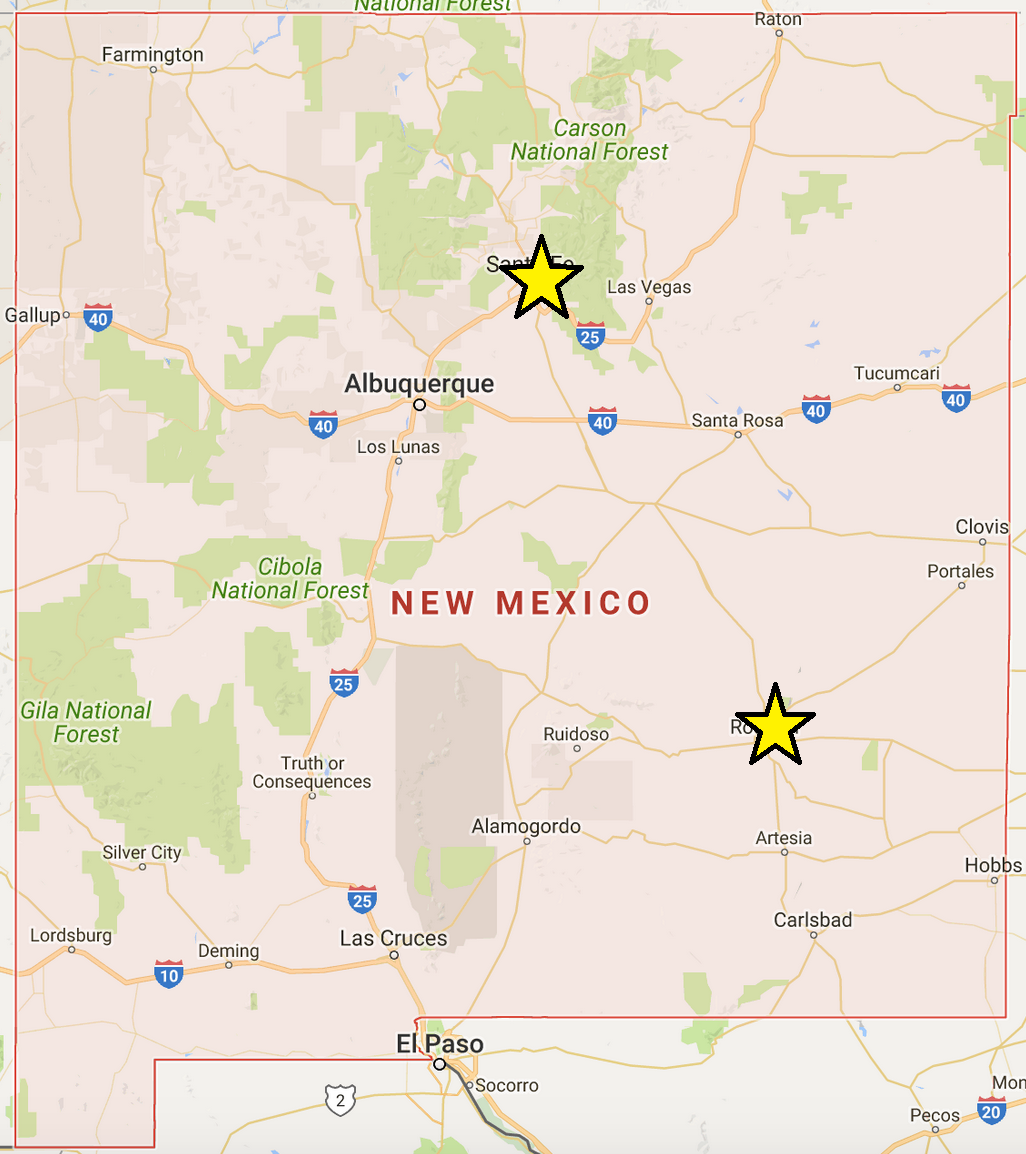
In many ways, Roswell was an ideal site for a community art center. Founded in the nineteenth century, Roswell was an agricultural center, with ranching being one of its largest industries during the 1930s. It was the second largest city in New Mexico, with a population of 12,500 in 1938, but it remained relatively isolated, with Santa Fe and Albuquerque being 200 miles away. Unlike other New Mexico towns such as Taos, moreover, which already had established art communities by the early twentieth century, Roswell's artistic scene did not develop in earnest until the 1960s and 1970s. What it did have, however, was a small, dedicated circle of individuals who were willing to put in the effort to establish a museum or similar institution.
As the building neared completion, the A&H Society realized that most of the money raised for the project had already been spent on construction, leaving little funding for furnishings or operations. At the suggestion of the State WPA Administrator, the Society offered the building to the FAP as part of its Community Art Center Project. The FAP and the A&H Society shared expenses, with the latter covering the maintenance of the actual building. In December 1938, the museum established an auxiliary group known as the Friends of Art to help cover exhibition costs.
Archiving the Federal Community Art Center Project
Archival documentation for the Federal Community Art Center Project is dispersed across multiple repositories. Many documents can be found at the Archives of American Art in Washington, DC, with the Holger Cahill Papers and the Mildred Baker papers. The National Archives at College Park in Maryland also has documents pertaining to the Project. Individual museums associated with the Project also retain documents from this period in varying degrees, with examples including the Roswell Museum, the Southside Community Art Center, the Walker Art Center, the Greenville Museum of Art, and the Middlesex County Museum. The archival memory of the Community Art Center Project then, is rhizomatic in character, with documents stored at multiple repositories existing across the country rather than in a single location, with each institution possessing varying degrees of documentation.
References
Gartler, Mark. "Rhizome." The Chicago School of Media Theory. https://lucian.uchicago.edu/blogs/mediatheory/keywords/rhizome/. Accessed February 23, 2021.
Grieve, Victoria. The Federal Art Project and the Creation of Middlebrow Culture. Urbana and Chicago: University of Illinois Press, 2009.
Fulton, Maurice. “The First Decades of the Chaves County Archaeological and Historical Society.” In Roundup on the Pecos. Edited by Elvis Fleming and Minor S. Huffman. Roswell: Chaves County Historical Society, 1978.
Parker, Thomas C. “The Federal Art Project as a Community Activity.” Speech presented at the art section of the New Mexico State Teachers’ Convention, Roswell, NM, October 28, 1938.
University of California, Berkeley. The Living New Deal: Still Working for America, https://livingnewdeal.org/, accessed July 19, 2018.
White, John Franklin, Editor. Art in Action: American Art Centers and the New Deal. Metuchen, NJ: The Scarecrow Press, 1987.
This page has paths:
- Who Worked Here? Sara Woodbury
- The Community Art Center Project Sara Woodbury
- The Community Art Center Project Sara Woodbury
- The Community Art Center Project Sara Woodbury
- The Community Art Center Project Sara Woodbury
- The Community Art Center Project Sara Woodbury
- The Community Art Center Project Sara Woodbury
- The Community Art Center Project Sara Woodbury
- The Community Art Center Project Sara Woodbury
- The Community Art Center Project Sara Woodbury
- The Community Art Center Project Sara Woodbury
- The Community Art Center Project Sara Woodbury
- The Community Art Center Project Sara Woodbury
- The Community Art Center Project Sara Woodbury
- The Community Art Center Project Sara Woodbury
- The Community Art Center Project Sara Woodbury
- The Community Art Center Project Sara Woodbury
- The Community Art Center Project Sara Woodbury
- The Community Art Center Project Sara Woodbury
- The Community Art Center Project Sara Woodbury
- The Community Art Center Project Sara Woodbury
- The Community Art Center Project Sara Woodbury
- The Community Art Center Project Sara Woodbury
- The Community Art Center Project Sara Woodbury
- The Community Art Center Project Sara Woodbury
- The Community Art Center Project Sara Woodbury
- The Community Art Center Project Sara Woodbury
- The Community Art Center Project Sara Woodbury
- The Community Art Center Project Sara Woodbury
- The Community Art Center Project Sara Woodbury
- The Community Art Center Project Sara Woodbury
- The Community Art Center Project Sara Woodbury
- The Community Art Center Project Sara Woodbury
- The Community Art Center Project Sara Woodbury
- Community Relations Sara Woodbury
- An Art Center Opens Sara Woodbury
- Becoming the Roswell Museum and Art Center Sara Woodbury
- Other New Mexico Art Centers Sara Woodbury
- Classes Sara Woodbury
- Exhibitions Sara Woodbury
- The Community Art Center Project Sara Woodbury
- The Community Art Center Project Sara Woodbury
- The Community Art Center Project Sara Woodbury
- The Community Art Center Project Sara Woodbury
- The Community Art Center Project Sara Woodbury
- The Community Art Center Project Sara Woodbury
- The Community Art Center Project Sara Woodbury
- The Community Art Center Project Sara Woodbury
- The Community Art Center Project Sara Woodbury
- The Community Art Center Project Sara Woodbury
- The Community Art Center Project Sara Woodbury
- The Community Art Center Project Sara Woodbury
- The Community Art Center Project Sara Woodbury
- Exploring the Roswell Museum Archive Sara Woodbury
- Introduction Sara Woodbury
Contents of this path:
- Introduction
- The Community Art Center Project
- List of Federal Community Art Centers, 1935-1942
- An Art Center Opens
- Who Worked Here?
- Exhibitions
- Classes
- Other New Mexico Art Centers
- Community Relations
- Becoming the Roswell Museum and Art Center
- Gallery: Roswell Museum Archive
- Exploring the Roswell Museum Archive