Community Relations
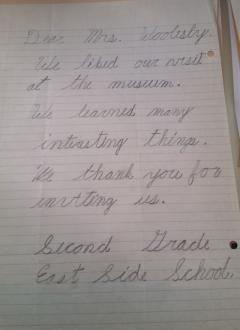
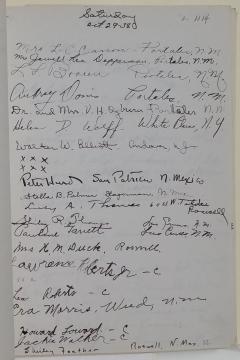
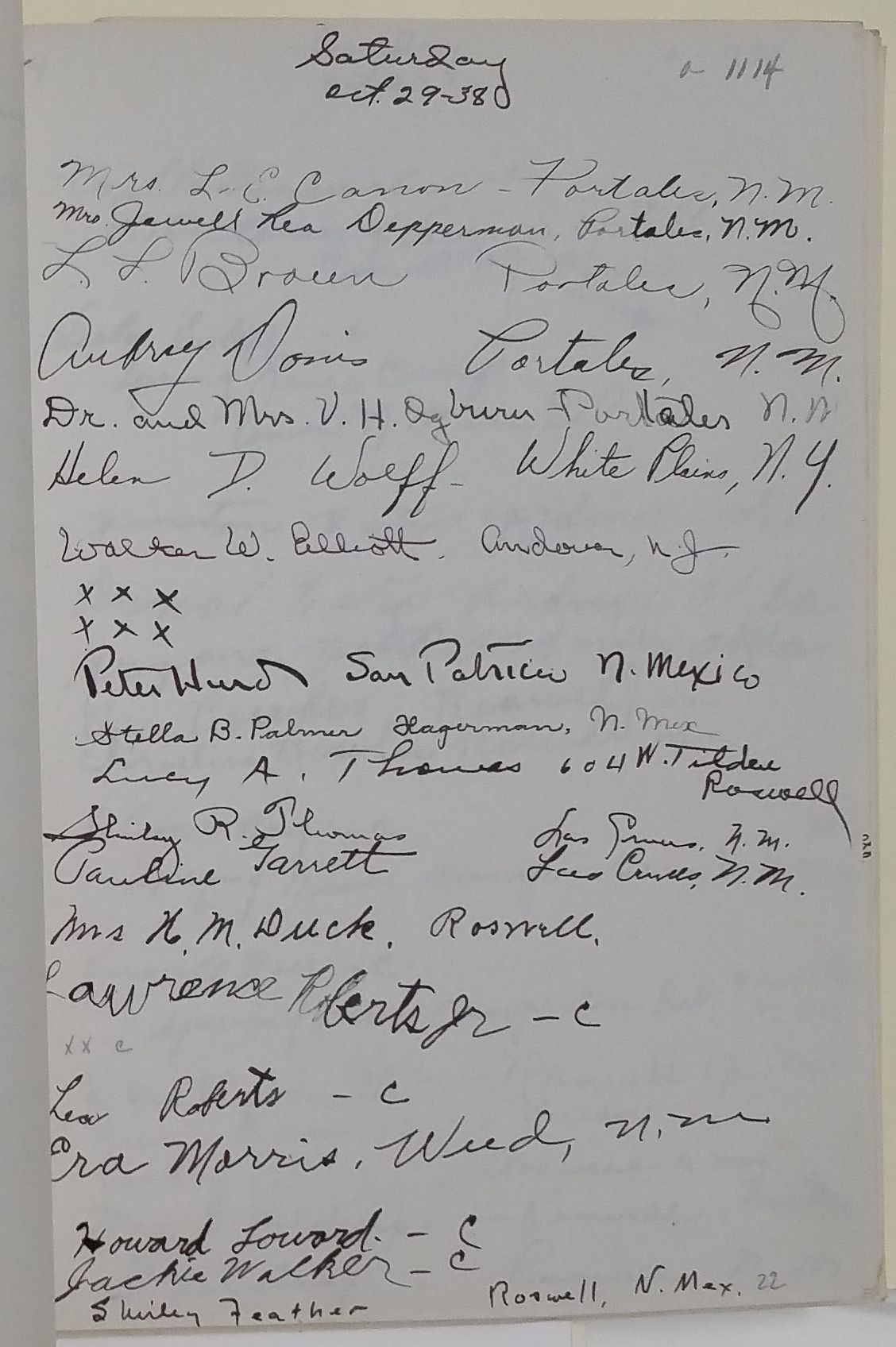
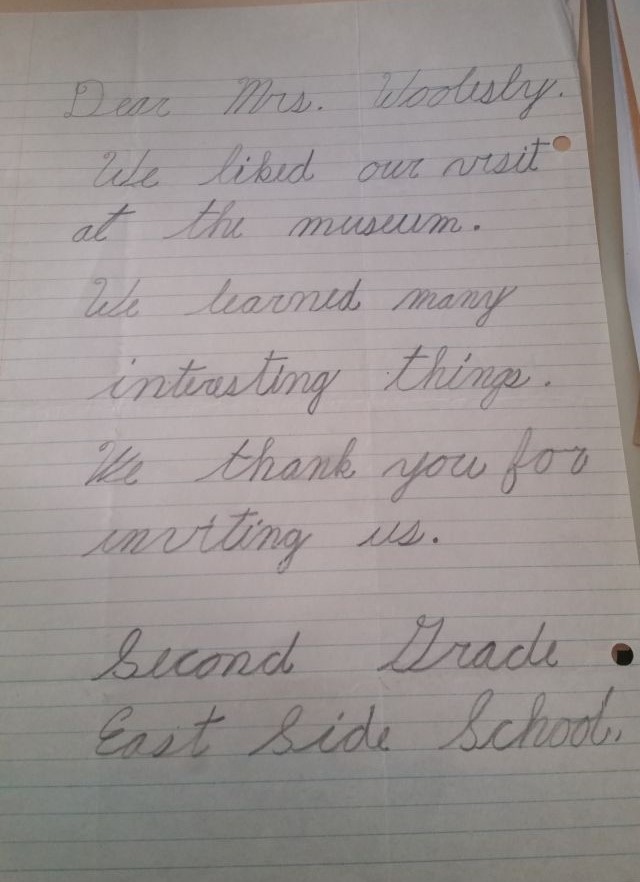
Over its five years of operation as a federal art center, the Roswell Museum would host about 33,000 visitors, or about 500 every month. During the first year alone, it had nearly 7,000 visitors, about half of Roswell's total population. While there are few direct responses from visitors recorded in the archive, staff correspondence does occasionally reference visitor reactions. In general, they appeared to respond most positively to exhibitions that highlighted representational or narrative art. An exhibition of Currier and Ives lithographs proved popular, for instance, as did an installation of woodblock prints from Santa Fe artist Gustave Baumann.
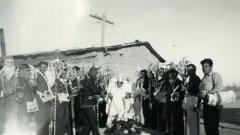
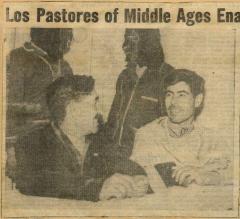
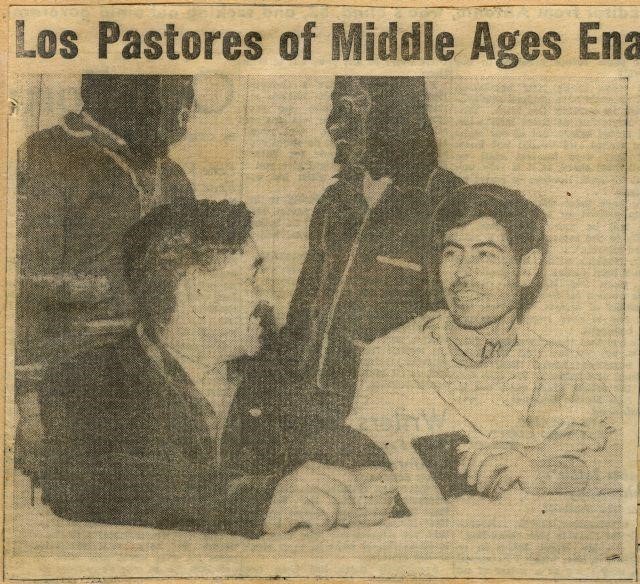
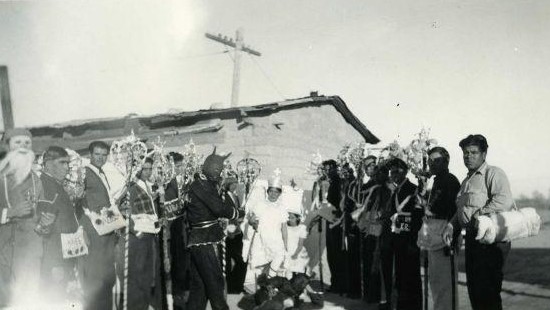
In addition to being an exhibition space, the Roswell Museum functioned as a community center by hosting club meetings and serving as a venue for concerts and other events, with the objective of infusing art into different social activities. Among the most remarkable performances that occurred at the Roswell Museum during the WPA era was the staging of a mystery play called Los Pastores. Mystery plays are dramatizations of the Bible that first appeared in medieval Europe. Los Pastores is a New Mexican retelling of the Nativity, or the birth of Jesus, from the perspective of the shepherds, and likely developed from Spanish plays that colonists introduced to the Americas during the sixteenth and seventeenth centuries. The play follows the shepherds through a series of comedic misadventures, as devils and various temptations try unsuccessfully to keep them from reaching the birth site of the Christ child.
Los Pastores was performed at the museum when director Roland Dickey learned about it during a visit to Chihuahita, Roswell's Hispanic neighborhood. According to newspaper accounts of the play, it had been performed in the Roswell area since the mid-nineteenth century. Dickey recognized an opportunity to introduce museum visitors to Roswell’s Hispanic culture and invited the all-male cast to give a special performance on December 27, 1938. Records indicate that it was a success, with 100 people attending the Spanish-language event.
In addition to hosting various clubs and providing free art classes, the Roswell Museum supervised other WPA-related projects in town. One of these undertakings included overseeing Roswell’s Civilian Conservation Corps (CCC) Camp. As the first of President Roosevelt’s New Deal organizations, the CCC provided young men with employment and assigned participants to camps around the country to work on tasks such as reforestation, building trails, and developing parks. The CCC camp in Roswell focused on activities such as carpentry, mural painting, and other community-based projects. The Roswell Museum also assisted in the decoration of City Hall, a WPA building that opened in 1940, and collaborated with neighboring art centers on other projects.
Overall, the response to the Roswell Museum appears to have been positive, and it remains a valued cultural asset within the community.
References
Grieve, Victoria. The Federal Art Project and the Creation of Middlebrow Culture. Urbana and Chicago: University of Illinois Press, 2009.
Art in Action: American Art Centers and the New Deal. Edited by John Franklin White. Metuchen, NJ: The Scarecrow Press, 1987.
All other documents come from the Roswell Museum and Art Center WPA Archive.
Roland Dickey to Russell Vernon Hunter, December 28, 1938.
Oral history interview with Roland F. Dickey, January 16, 1964, Archives of American Art, Smithsonian Institution.
“Los Pastores Draws Crowd to Museum,” Roswell Morning Dispatch, December 28, 1938.
“Large Crowd Sees ‘Los Pastores’,” Roswell Daily Record, December 28, 1938.
Paul Horgan, “The Local Value of Roswell Museum, Federal Art Center,” Roswell Daily Record, January 7, 1939.
Roland Dickey to Russell Vernon Hunter, March 13, 1940.
This page has paths:
- Who Worked Here? Sara Woodbury
- Community Relations Sara Woodbury
- Community Relations Sara Woodbury
- Community Relations Sara Woodbury
- Community Relations Sara Woodbury
- Community Relations Sara Woodbury
- Community Relations Sara Woodbury
- Community Relations Sara Woodbury
- Community Relations Sara Woodbury
- Community Relations Sara Woodbury
- Community Relations Sara Woodbury
- Community Relations Sara Woodbury
- Community Relations Sara Woodbury
- Community Relations Sara Woodbury
- Community Relations Sara Woodbury
- Community Relations Sara Woodbury
- Community Relations Sara Woodbury
- Community Relations Sara Woodbury
- Community Relations Sara Woodbury
- Community Relations Sara Woodbury
- Community Relations Sara Woodbury
- Community Relations Sara Woodbury
- Community Relations Sara Woodbury
- Community Relations Sara Woodbury
- Community Relations Sara Woodbury
- An Art Center Opens Sara Woodbury
- Community Relations Sara Woodbury
- Becoming the Roswell Museum and Art Center Sara Woodbury
- Other New Mexico Art Centers Sara Woodbury
- Classes Sara Woodbury
- Exhibitions Sara Woodbury
- Community Relations Sara Woodbury
- Community Relations Sara Woodbury
- Community Relations Sara Woodbury
- Community Relations Sara Woodbury
- Community Relations Sara Woodbury
- Community Relations Sara Woodbury
- Community Relations Sara Woodbury
- Community Relations Sara Woodbury
- Community Relations Sara Woodbury
- Community Relations Sara Woodbury
- Exploring the Roswell Museum Archive Sara Woodbury
- Introduction Sara Woodbury
- The Community Art Center Project Sara Woodbury