Exhibitions
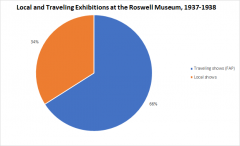
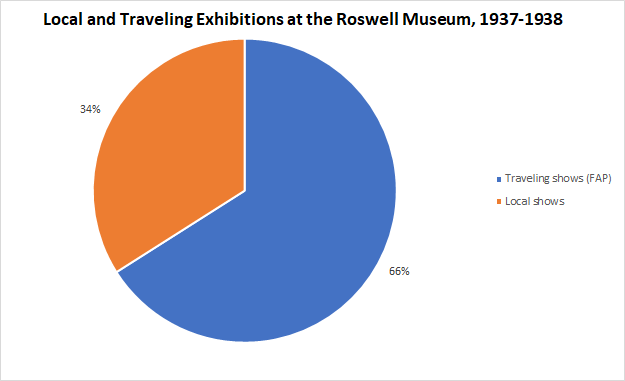
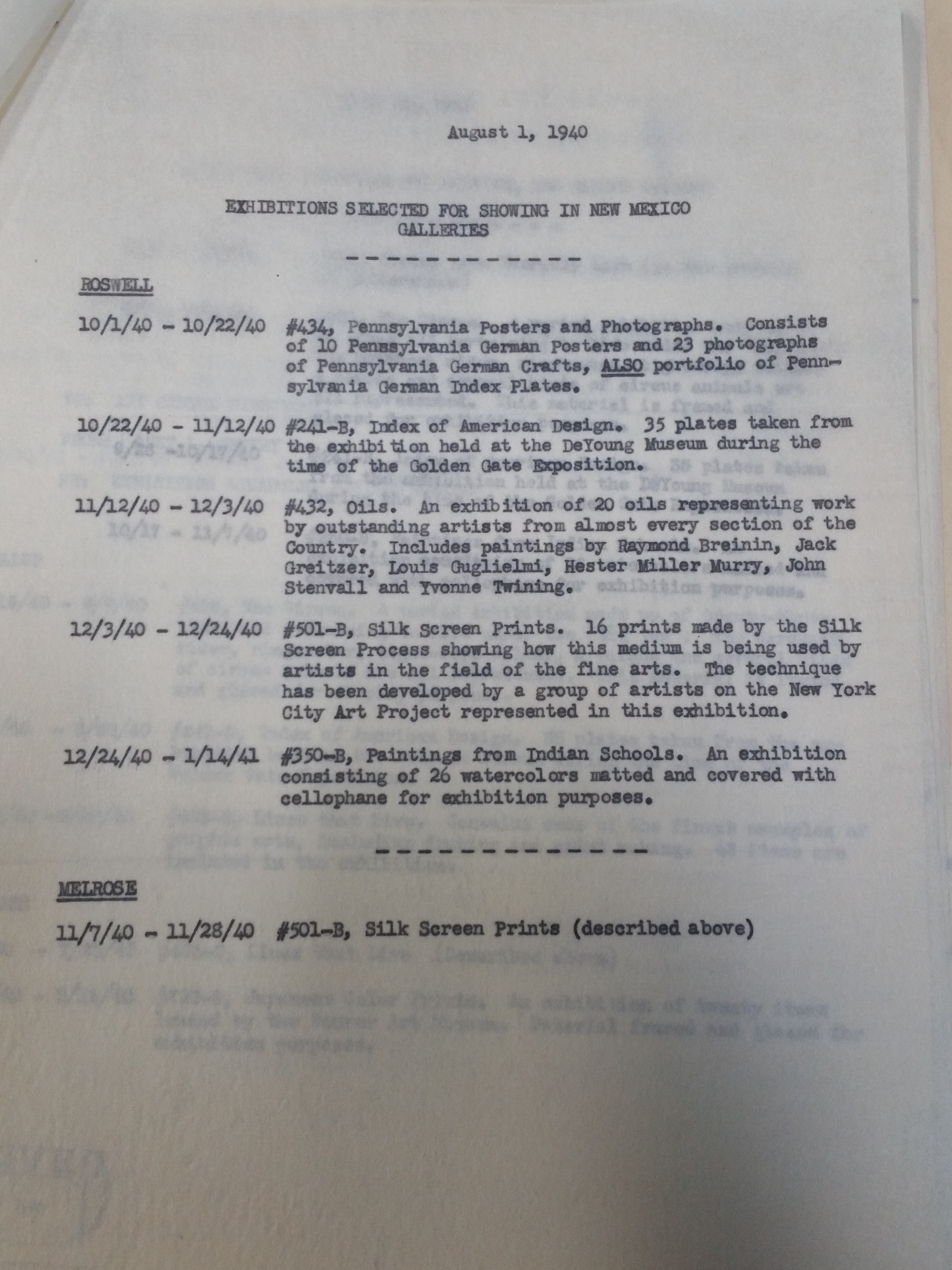
The exhibition schedule included traveling shows assembled by the Federal Art Project (FAP), and locally-organized installations. For a list of exhibitions shown at the Roswell Museum, click here.
Shows rotated quickly, with the main gallery usually featuring at least two FAP-organized exhibitions per month. Exhibitions were often combined, allowing visitors to see different types of work at once. FAP shows usually traveled to Roswell by train, and art centers adhered to a specific schedule to ensure that works reached their destinations on time.
Paperwork accompanied every exhibition and included checklists, shipping receipts, and schedules. Although the federal government usually paid for transportation, individual art centers were responsible for ensuring that shows shipped to the next destination on time.
The exhibitions included an eclectic range of materials, from contemporary artwork produced by FAP workshops, to historical lithographs and photographic reproductions. While some of these shows featured historical materials from the Library of Congress or Tulane University, most of these traveling exhibitions highlighted contemporary work from the Federal Art Project. California and New York appear in the schedule several times, although the Roswell Museum also exhibited FAP works from Pennsylvania, Ohio, and Louisiana. The museum exhibited the Index of American Design, a compendium of hand-painted renderings of antique furniture, folk art, and other examples of American material culture, at least three times between 1938 and 1942. The museum also showed children's art on several occasions, reflecting the FAP's interest in sharing and promoting its art education initiatives. In 1930s Roswell, a museum visitor could view contemporary lithographs produced in New York, antiques from local collectors, and more.
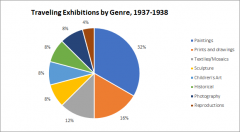
Of the traveling exhibitions, paintings constituted a third of the materials, followed by prints and drawings, textiles, and sculpture. In keeping with the didactic character of the FAP, several of the exhibitions explained how the works of art were made, with examples including The Making of a Mosaic, and How Tapestries are Made. Most of the traveling shows consisted of group installations featuring three or more artists, but there were also several solo shows, including work from women artists such as Ruth Reeves and Erica Karawina. The Roswell Museum also showed historical and anthropological materials, such as an exhibition on Mayan civilization organized by Tulane University. While most exhibits featured original artwork, the Mayan exhibition included casts of sculpture. A show of contemporary drawings from 1939 featured only reproductions.
Other shows explored New Mexico’s different cultures. Native American exhibitions appear in the schedule regularly, and encompassed historical artifacts as well as student painting from the Santa Fe Indian School. Hispanic traditions were also addressed, with examples including an exhibition of santos, or wooden carvings of saints, and a selection of plates from the Portfolio of Spanish Colonial Design, a set of fifty hand-colored woodblock and linocut prints illustrating different examples of Spanish Colonial decorative art in New Mexico.
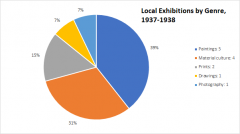
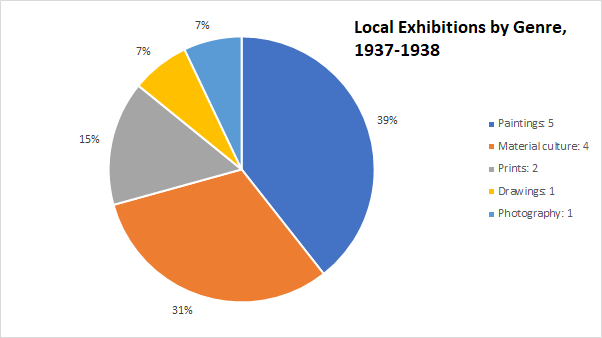
Locally-organized exhibitions included archaeological materials, antiques, and paintings by area artists. Like the touring exhibitions, paintings constitute the majority of the temporary shows, with nearly 40% dedicated to easel works. Material culture comes in second, with objects including antiques, flowers, and local collections of historical artifacts. Prints, drawings, and photographs round out the selection. Several local exhibitions augmented national shows, as part of an effort to give residents a sense of ownership and familiarity over the material. The first showing of the Index of American Design in 1938, for instance, featured a display of local antiques, with the intention of having outstanding objects selected for inclusion in the Index itself. Later that summer, residents were invited to bring in their own examples of Currier and Ives prints to display alongside selections from the Library of Congress. In the most ambitious example, an exhibition of FAP flower paintings was augmented with both locally-produced paintings and several bouquets from the Garden Club.

.jpg)
By inviting residents to supplement rotating shows with their own material, the Roswell Museum encouraged the community to contribute to exhibition content, a proactive role that underscored the participatory, educational focus of community art centers. The Roswell Museum presented itself as a collaborator even as it endeavored to educate visitors about its own beliefs regarding what constituted good art.
References
Grieve, Victoria. The Federal Art Project and the Creation of Middlebrow Culture. Urbana and Chicago: University of Illinois Press, 2009.
Nunn, Tey Marianna. Sin Nombre: Hispana and Hispano Artists of the New Deal Era. Albuquerque: University of New Mexico Press, 2001.
All other documents below come from the Roswell Museum and Art Center's WPA archive.
Roland Dickey to Russell Vernon Hunter, August 22, 1938.
Donald Bear to Russell Vernon Hunter, September 8, 1938.
Memorandum from WPA to all State WPA Offices, April 22, 1939.
Shipping Record for FAP Exhibition #279, Erica Karawina’s Impressions of the Dance, scheduled June 16-July 18, 1938.
Shipping Record for FAP Exhibition #10, Facsimiles of Modern Drawings, scheduled July 20-August 9, 1939.
Shipping Record for FAP Exhibition #241, Index of American Design, scheduled January 8-27, 1938.
Shipping Record for FAP Exhibition #241-B, The Index of American Design, scheduled October 22-November 12, 1940.
Shipping Record for FAP Exhibition #511, Index of American Design, scheduled March 10-31, 1942.
Shipping Record for FAP Exhibition #333, Oils and Watercolors, scheduled July 18-30, 1938.
Shipping Record for FAP Exhibition #364-A, Currier and Ives Prints, scheduled July 31-August 17, 1938.
Shipping Record for FAP Exhibition #271, The Making of a Mosaic, scheduled August 18-September 13, 1938.
Shipping Record for Indian School exhibition, scheduled April 21-May 6, 1938.
FAP Form 7, Progress Report for January 1941, submitted by Chester Faris.
Russell Vernon Hunter to Roland Dickey, July 25, 1938.
Roland Dickey to Russell Vernon Hunter, December 30, 1938.
Mary Katherine Higgs to Russell Vernon Hunter, January 6, 1938.
Russell Vernon Hunter to Robert Sprague, January 22, 1938.
“Variety Spices Summer Showing of Pictures on Display in City,” Roswell Morning Dispatch, 21 July 1938.
This page has paths:
- Who Worked Here? Sara Woodbury
- Exhibitions Sara Woodbury
- Exhibitions Sara Woodbury
- Exhibitions Sara Woodbury
- Exhibitions Sara Woodbury
- Exhibitions Sara Woodbury
- Exhibitions Sara Woodbury
- Exhibitions Sara Woodbury
- Exhibitions Sara Woodbury
- Exhibitions Sara Woodbury
- Exhibitions Sara Woodbury
- Exhibitions Sara Woodbury
- Exhibitions Sara Woodbury
- Exhibitions Sara Woodbury
- Exhibitions Sara Woodbury
- Exhibitions Sara Woodbury
- Exhibitions Sara Woodbury
- Exhibitions Sara Woodbury
- Exhibitions Sara Woodbury
- Exhibitions Sara Woodbury
- Classes Sara Woodbury
- An Art Center Opens Sara Woodbury
- Community Relations Sara Woodbury
- Other New Mexico Art Centers Sara Woodbury
- Becoming the Roswell Museum and Art Center Sara Woodbury
- Exhibitions Sara Woodbury
- Exhibitions Sara Woodbury
- Exhibitions Sara Woodbury
- Exhibitions Sara Woodbury
- Exhibitions Sara Woodbury
- Exhibitions Sara Woodbury
- Exhibitions Sara Woodbury
- Exhibitions Sara Woodbury
- Exhibitions Sara Woodbury
- Exhibitions Sara Woodbury
- Exhibitions Sara Woodbury
- Exhibitions Sara Woodbury
- Exhibitions Sara Woodbury
- Exhibitions Sara Woodbury
- Exhibitions Sara Woodbury
- Exhibitions Sara Woodbury
- Exhibitions Sara Woodbury
- Exhibitions Sara Woodbury
- Exhibitions Sara Woodbury
- Exhibitions Sara Woodbury
- Exhibitions Sara Woodbury
- Exhibitions Sara Woodbury
- Exhibitions Sara Woodbury
- Exhibitions Sara Woodbury
- Exhibitions Sara Woodbury
- Exhibitions Sara Woodbury
- Exhibitions Sara Woodbury
- Exhibitions Sara Woodbury
- Exhibitions Sara Woodbury
- Exhibitions Sara Woodbury
- Exhibitions Sara Woodbury
- Exhibitions Sara Woodbury
- Exploring the Roswell Museum Archive Sara Woodbury
- The Community Art Center Project Sara Woodbury
- Introduction Sara Woodbury
_thumb.jpg)